📋 What You'll Learn About Belly Fat Loss
- What Is Belly Fat — and Why Does Belly Fat Loss Matter?
- Why Belly Fat Loss Is So Hard — The Real Reasons
- The Belly Fat Loss Calorie Deficit Strategy
- Best Diet Plan for Belly Fat Loss — 5 Rules
- 5 Best Exercises for Belly Fat Loss
- Realistic Belly Fat Loss Timeline — Week by Week
- How FitFuelAI Builds Your Belly Fat Loss Plan
- Frequently Asked Questions
What Is Belly Fat — and Why Does Belly Fat Loss Matter?
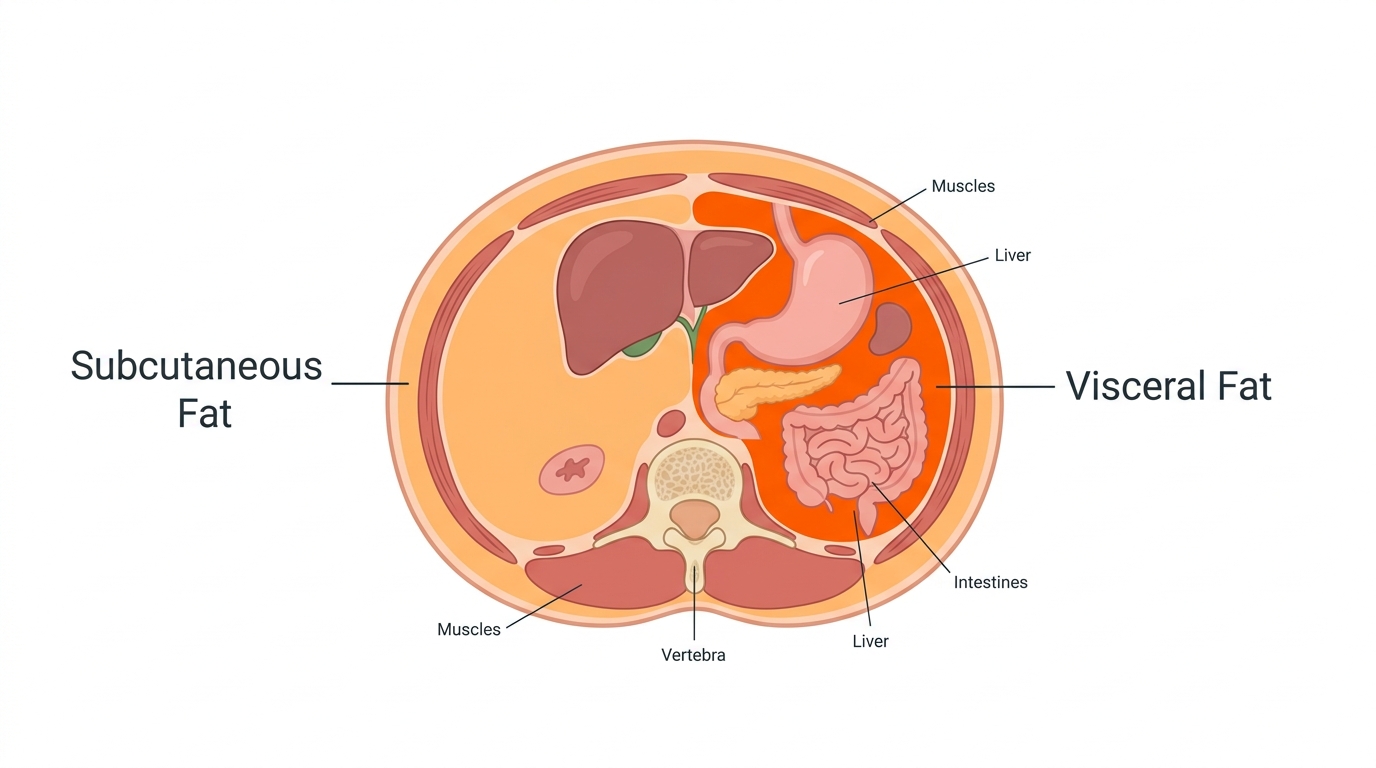
Belly fat loss is one of the most searched health goals worldwide — and for good reason. Not all body fat is created equal. The fat you can pinch around your waist is subcutaneous fat — sitting just beneath the skin. But the belly fat that truly matters for your health is visceral fat: the deep abdominal fat wrapped around your internal organs — liver, pancreas, and intestines.
Visceral fat is metabolically active. It releases inflammatory chemicals and hormones that raise your risk of type 2 diabetes, heart disease, high blood pressure, and metabolic syndrome. Studies consistently show that even people with a "normal" BMI can carry dangerous levels of visceral fat — sometimes called TOFI (Thin Outside, Fat Inside). According to the World Health Organization, over 1 billion people worldwide are now living with obesity — the majority carrying excess visceral belly fat as a primary risk factor.
A waist circumference above 94 cm (37 in) for men or 80 cm (31.5 in) for women indicates elevated health risk from visceral belly fat — regardless of total body weight.
The good news: visceral fat responds faster to diet and exercise than subcutaneous fat. When you create a proper calorie deficit and follow the strategies in this guide, visceral fat is often the first to shrink — measurably improving your metabolic health within weeks.
The good news: visceral fat responds faster to diet and exercise than subcutaneous fat. When you create a proper calorie deficit and follow the strategies in this guide, visceral fat is often the first to shrink — measurably improving your metabolic health within weeks.
Why Belly Fat Loss Is So Hard — The Real Reasons
If you've ever done 100 crunches a day and still seen no change around your waist, you're not alone. Belly fat is stubborn for specific biological reasons:
- High cortisol: Stress triggers cortisol, a hormone that specifically promotes abdominal fat storage.
- Insulin resistance: When cells resist insulin, the body stores excess glucose as belly fat rather than burning it.
- Poor sleep: Less than 6 hours of sleep per night is directly linked to higher visceral fat accumulation.
- Wrong calorie strategy: Starving without tracking macros causes muscle loss, not fat loss — making the belly appear softer.
- Spot reduction myth: You cannot target belly fat through ab exercises alone. Fat loss is systemic — it comes from a whole-body energy deficit.
The solution isn't to work harder on your abs — it's to create the right whole-body conditions for fat loss through calorie management, diet quality, and strategic exercise.
The Belly Fat Loss Calorie Deficit Strategy That Actually Works
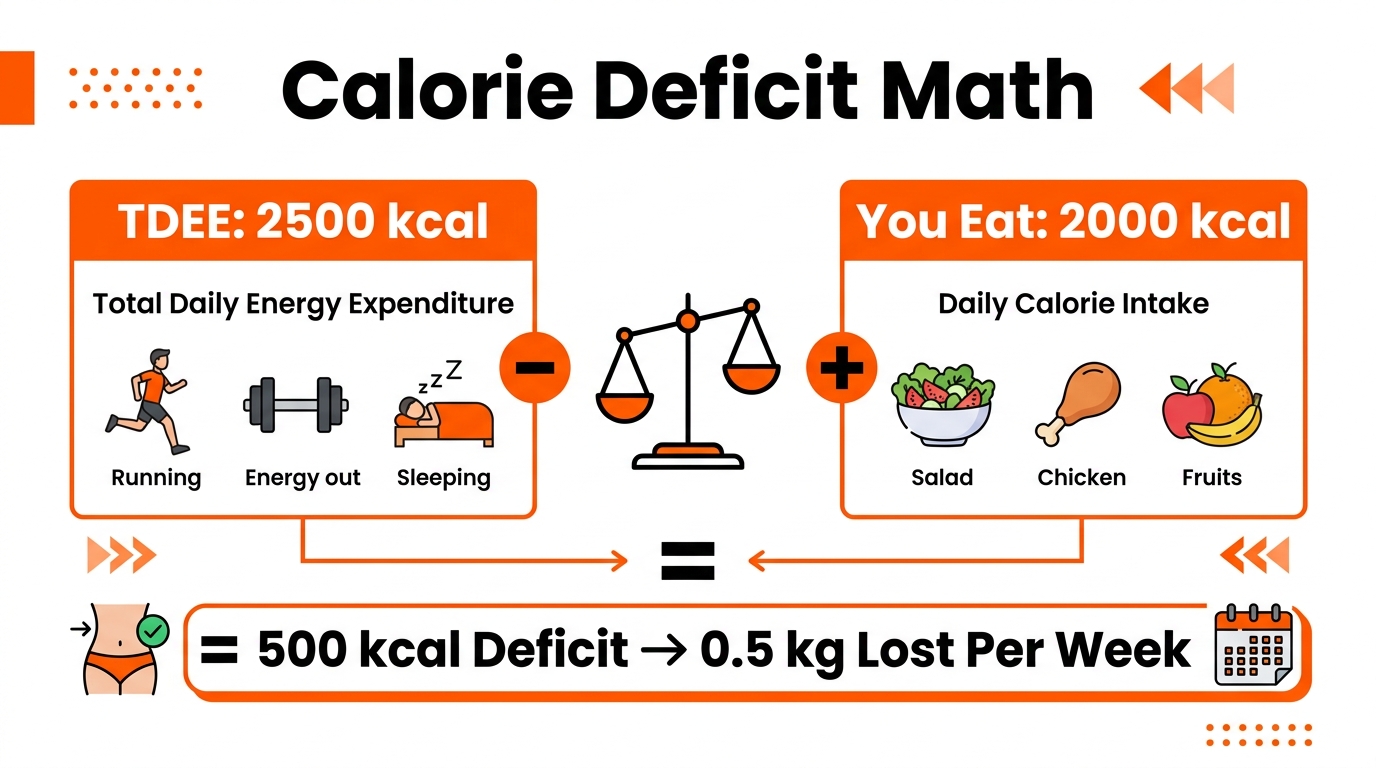
Every belly fat loss strategy, no matter how it's packaged, works through one mechanism: a sustained calorie deficit. You burn more calories than you consume — and your body is forced to mobilize stored fat (including visceral belly fat) for energy.
Step 1 — Calculate Your TDEE
Your Total Daily Energy Expenditure (TDEE) is the total calories your body burns each day — including basic functions, digestion, and physical activity. This is your maintenance level. Eat below this and you lose fat. Eat above it and you gain.
Step 2 — Set a 300–500 Calorie Daily Deficit
A 500-calorie daily deficit creates approximately 0.5 kg of fat loss per week — a safe, sustainable rate that preserves muscle. Going below 1,200 calories (women) or 1,500 calories (men) is counterproductive — it triggers metabolic slowdown and muscle breakdown, making long-term belly fat loss harder, not easier.
| Daily Deficit | Weekly Fat Loss | Monthly Fat Loss | Risk Level |
|---|---|---|---|
| 200–300 kcal | ~0.2–0.25 kg | ~0.9 kg | Very Low |
| 300–500 kcal | ~0.3–0.5 kg | ~1.3–2 kg | Low (Optimal) |
| 500–750 kcal | ~0.5–0.7 kg | ~2–3 kg | Moderate |
| 750–1000 kcal | ~0.7–1 kg | ~3–4 kg | High (Muscle Loss Risk) |
Skip the manual math. FitFuelAI calculates your exact TDEE, calorie target, and macro split automatically based on your body stats — and gives you a free downloadable diet plan in 30 seconds. Try it here →
Skip the manual math. FitFuelAI calculates your exact TDEE, calorie target, and macro split automatically based on your body stats — and gives you a free downloadable diet plan in 30 seconds. Try it here →
Best Diet Plan for Belly Fat Loss — 5 Non-Negotiable Rules
Calorie deficit is the engine — but what you eat determines whether you lose fat or lose muscle + fat + water. These are the non-negotiable dietary principles for targeting belly fat:
1. Prioritize High Protein (1.6–2.2g per kg bodyweight)
Protein has a 30% thermic effect — your body burns 30 calories digesting every 100 calories of protein you eat. More importantly, adequate protein preserves lean muscle during a calorie deficit. Losing muscle slows metabolism and makes the remaining belly fat more prominent. Target 120–180g of protein daily depending on your weight.
2. Reduce Refined Carbs and Added Sugar
Refined carbohydrates — white bread, sugary drinks, packaged snacks — spike insulin, which directly promotes visceral fat storage. Replacing them with whole grains, legumes, and vegetables keeps insulin stable and reduces belly fat accumulation even without changing total calories significantly.
3. Eat More Fiber (25–35g Per Day)
Soluble fiber forms a gel in your gut that slows digestion, reduces appetite, and has been directly linked to reduced visceral fat in clinical studies. Top sources: oats, lentils, chickpeas, apples, flaxseed, and vegetables.
4. Don't Fear Healthy Fats
Dietary fat does not directly become belly fat. Healthy fats from nuts, olive oil, eggs, and fatty fish reduce inflammation, improve insulin sensitivity, and actually support the hormonal environment needed for visceral fat loss. The enemy is excess refined carbs — not fat.
5. Time Your Meals Strategically
Front-loading calories earlier in the day (larger breakfast and lunch, smaller dinner) aligns with your body's natural insulin sensitivity rhythm and is associated with faster visceral fat reduction. Eating your biggest meal within 2 hours of sleeping promotes fat storage, not loss.
5. Time Your Meals Strategically
Front-loading calories earlier in the day (larger breakfast and lunch, smaller dinner) aligns with your body's natural insulin sensitivity rhythm and is associated with faster visceral fat reduction. Eating your biggest meal within 2 hours of sleeping promotes fat storage, not loss.
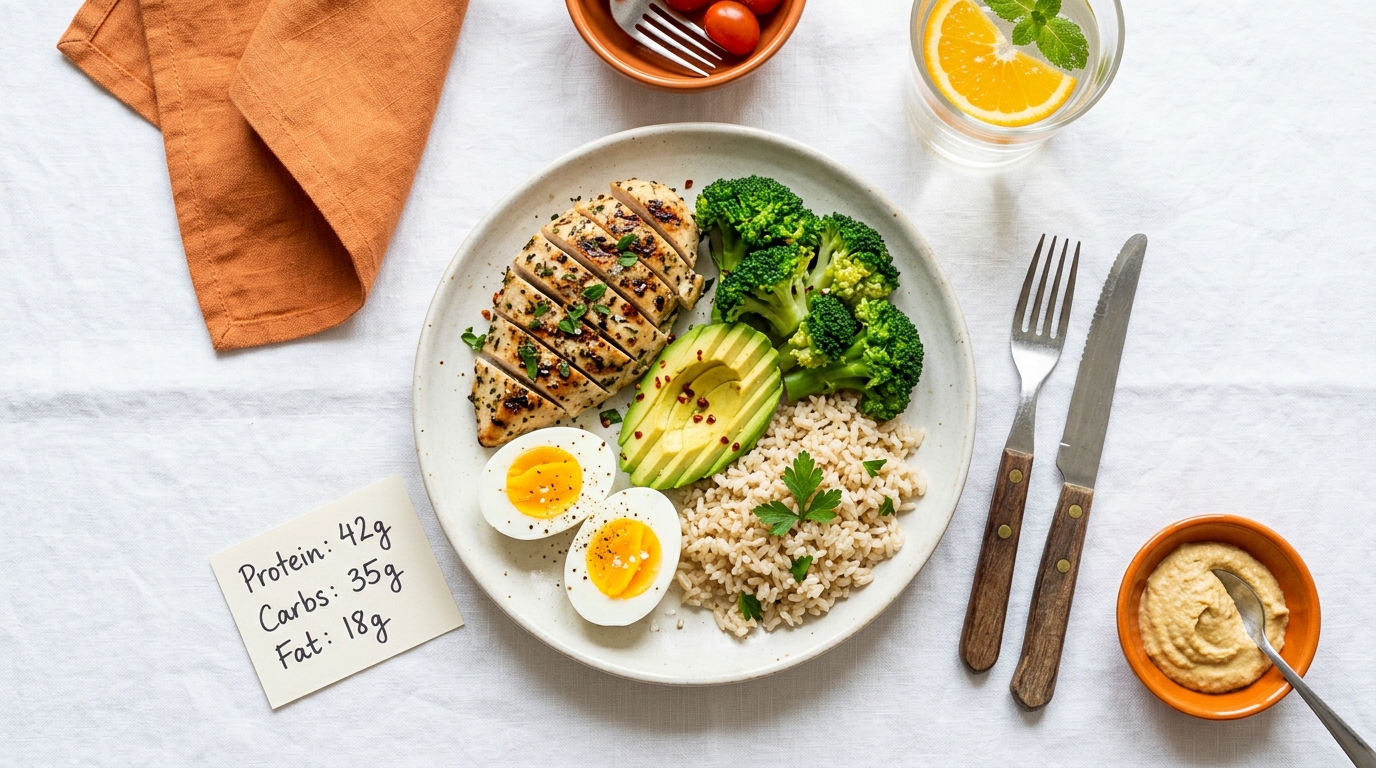
Get Your Personalized Belly Fat Diet Plan — Free
FitFuelAI uses AI to calculate your exact calorie target, macro split, and meal plan based on your body. No signup. No credit card. Instant PDF.
Calculate My Free Plan →100% free • No signup required • Instant results
5 Best Exercises for Belly Fat Loss — Ranked by Effectiveness
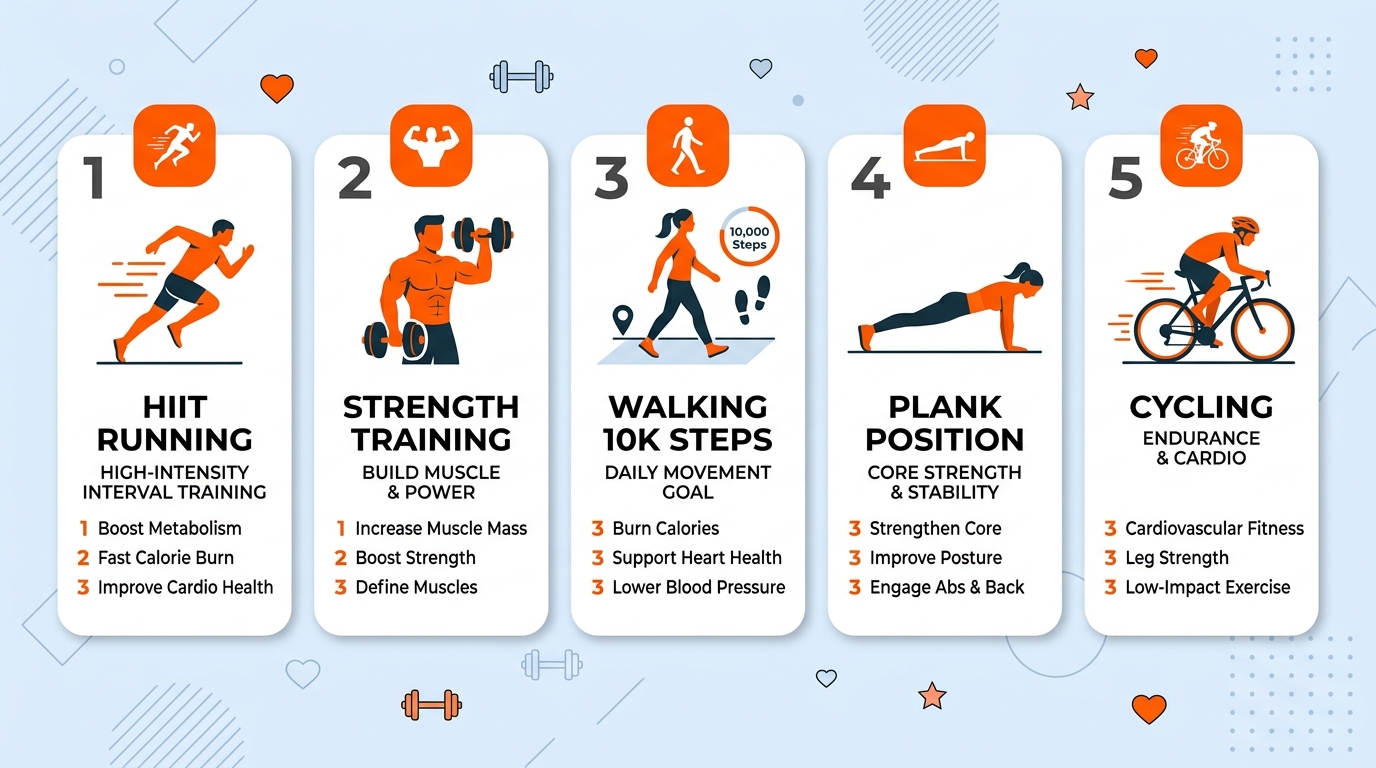
Remember: you cannot spot-reduce belly fat through ab work alone. Exercise accelerates overall fat loss by increasing your TDEE — making it easier to maintain a calorie deficit and triggering hormonal changes that specifically mobilize visceral fat. A landmark study published in PubMed confirmed that HIIT reduces abdominal fat significantly more than moderate-intensity continuous training over the same time period.
- High-Intensity Interval Training (HIIT) 20–30 minutes of HIIT (e.g., sprint 30 seconds, rest 30 seconds × 10 rounds) burns far more visceral fat than steady-state cardio at the same time investment. Studies show HIIT reduces abdominal fat by up to 28% more than moderate cardio.
- Strength Training (3–4x per week) Building muscle raises your resting metabolic rate — meaning you burn more calories even at rest. Compound lifts (squats, deadlifts, bench press) burn maximum calories and create the hormonal environment (testosterone, growth hormone) that mobilizes belly fat.
- Brisk Walking (7,000–10,000 steps/day) Walking is underrated. Daily step targets create a consistent calorie burn without stress-hormone spikes that can worsen belly fat. It's the most sustainable form of exercise — and research shows dedicated walkers lose comparable belly fat to runners over 6-month periods.
- Core & Plank Training While planks don't burn belly fat directly, they build the deep transverse abdominal muscles that give you a flatter appearance — and improve posture that makes existing belly fat less visible. 3 sets of 30–60 second planks daily is effective.
- Cycling or Swimming (Low-Impact Option) For those with joint issues or who are just starting out, cycling and swimming are excellent low-impact options that still elevate heart rate enough to create a significant calorie burn and reduce cortisol — both key for visceral fat loss.
Realistic Belly Fat Loss Timeline — Week by Week Results
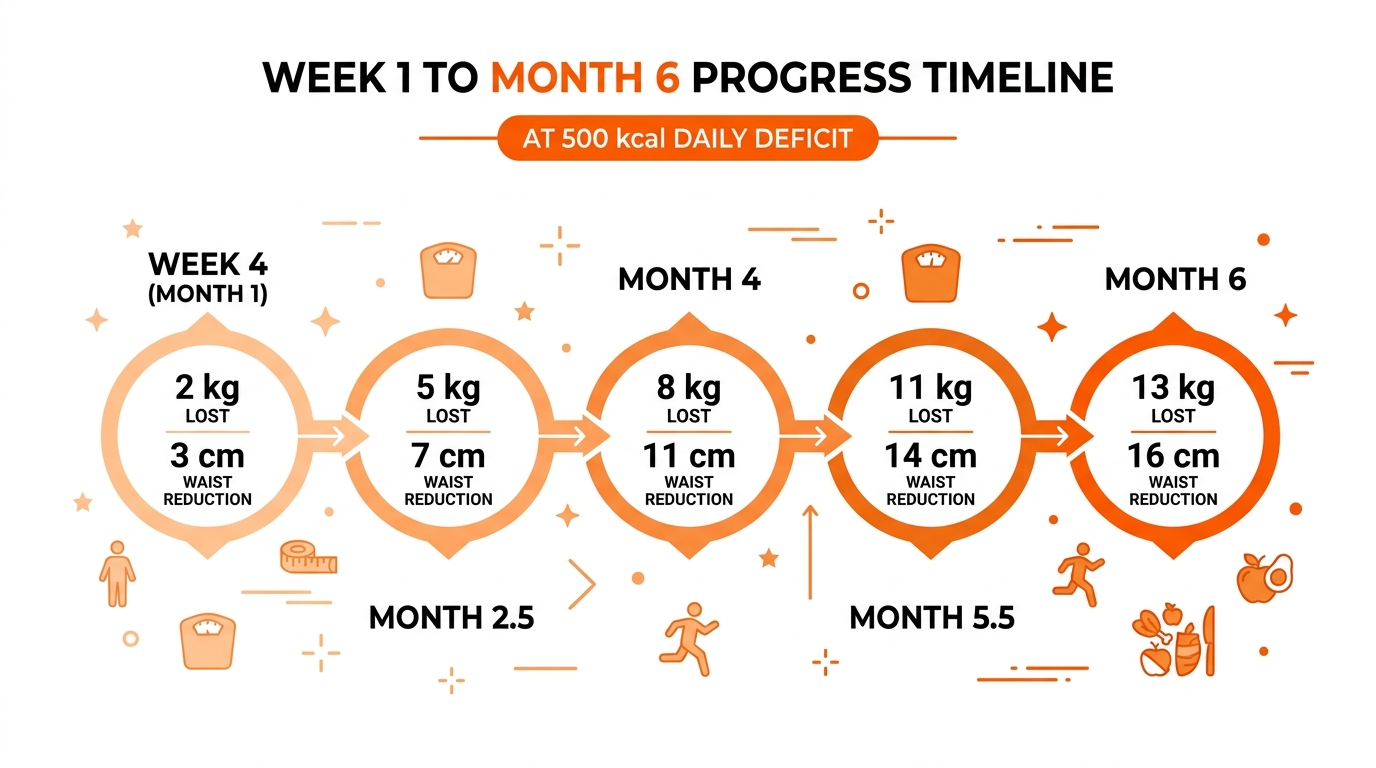
Belly fat loss is not linear — and waist measurements change at a different rate than scale weight. Here's what to realistically expect at a consistent 500-calorie daily deficit with adequate protein and 3–4 exercise sessions per week:
| Timeframe | Total Fat Lost | Waist Reduction (est.) | What You'll Notice |
|---|---|---|---|
| Week 1–2 | 0.5–1.5 kg | 1–2 cm | Less bloating, clothes feel slightly looser |
| Week 3–4 | 2–3 kg | 2–4 cm | Visible waist definition beginning |
| Month 2 | 4–6 kg | 4–6 cm | Significant waist reduction, energy improves |
| Month 3 | 6–9 kg | 6–10 cm | Clear transformation visible in mirror |
| Month 4–6 | 9–15 kg | 10–16 cm | Dramatic change, visceral fat significantly reduced |
These estimates assume a consistent 500 kcal deficit, 120–160g daily protein, and 3–4 exercise sessions per week. Individual results vary based on starting weight, age, hormones, and sleep quality. Use FitFuelAI's calculator for a timeline personalized to your exact body metrics.
These estimates assume a consistent 500 kcal deficit, 120–160g daily protein, and 3–4 exercise sessions per week. Individual results vary based on starting weight, age, hormones, and sleep quality. Use FitFuelAI's calculator for a timeline personalized to your exact body metrics.
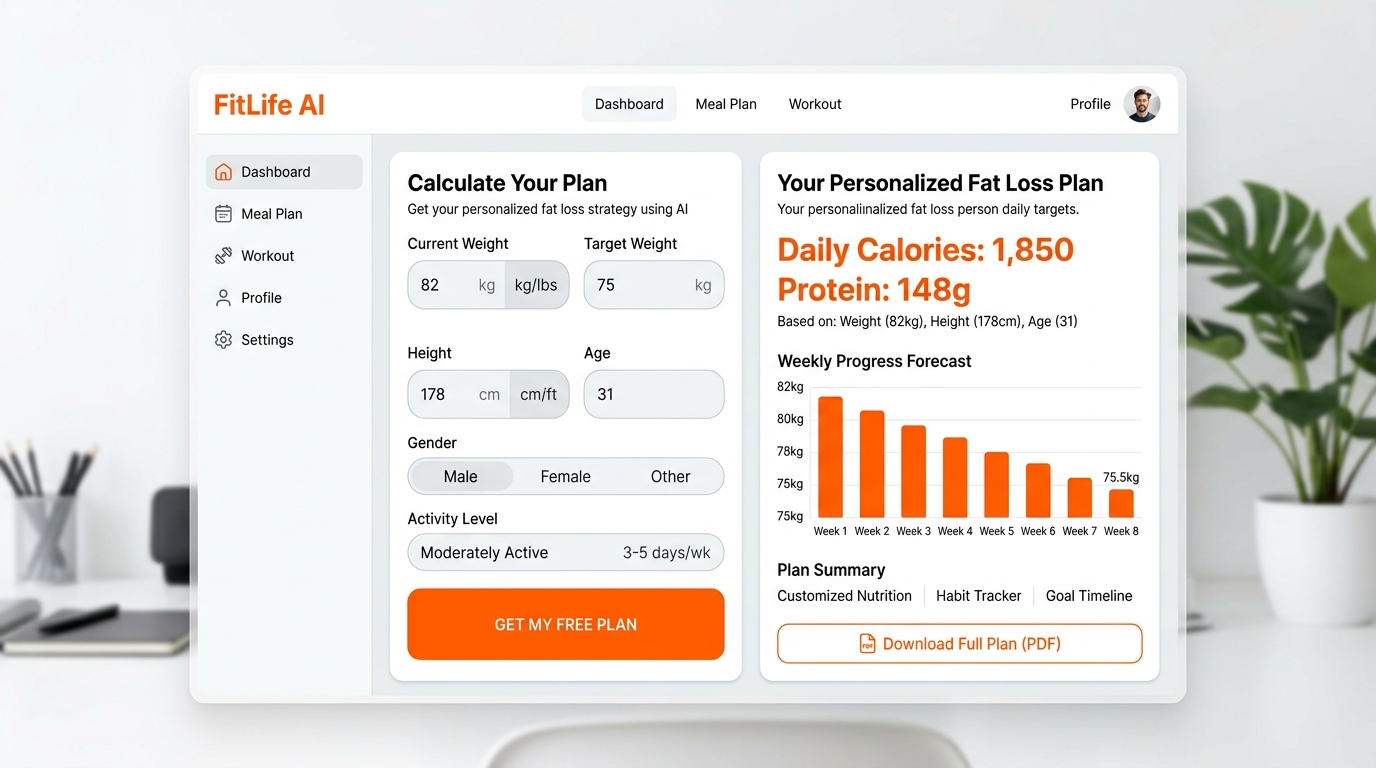
How FitFuelAI Builds Your Personalized Belly Fat Loss Plan
Doing all these calculations manually — TDEE, macro splits, deficit sizing, weekly projections — is time-consuming and easy to get wrong. FitFuelAI's free AI Fat Loss Calculator handles every step automatically and delivers a complete, downloadable plan in under 30 seconds.
- Enter Your Details Input your current weight, height, age, gender, activity level, workout frequency, and fat loss goal speed. The tool also includes a budget-friendly South Asian meal option.
- AI Analyzes Your Body FitFuelAI uses the Mifflin-St Jeor BMR formula, TDEE activity multipliers, the 7,700 kcal/kg fat-loss rule, and Deurenberg body fat estimates — all calibrated to your individual inputs simultaneously.
- Get Your Complete Plan You receive: your daily calorie target, exact protein/carb/fat grams, a week-by-week belly fat loss timeline, and a downloadable PDF meal plan — 100% free, no account needed.
Start Losing Belly Fat the Smart Way — Today
Get your personalized calorie target, macro split, and fat loss timeline in 30 seconds. No payments. No subscriptions. Just results.
Get My Free Fat Loss Plan →✅ No signup ✅ No credit card ✅ Instant PDF download