Calorie Deficit for Fat Loss: The Complete 2026 Guide (With AI That caculate calories for You)
- What Is a Calorie Deficit — Really?
- Why a Calorie Deficit Is the Foundation of Every Fat Loss Plan
- How to Calculate Your Personal Calorie Deficit
- How Big Should Your Calorie Deficit Be?
- The 5 Most Common Calorie Deficit Mistakes (And How to Fix Them)
- The Best Foods to Eat in a Calorie Deficit
- How AI Transforms Calorie Tracking From a Chore Into a Superpower
- FAQ: Your Calorie Deficit Questions Answered
What Is a Calorie Deficit — Really?
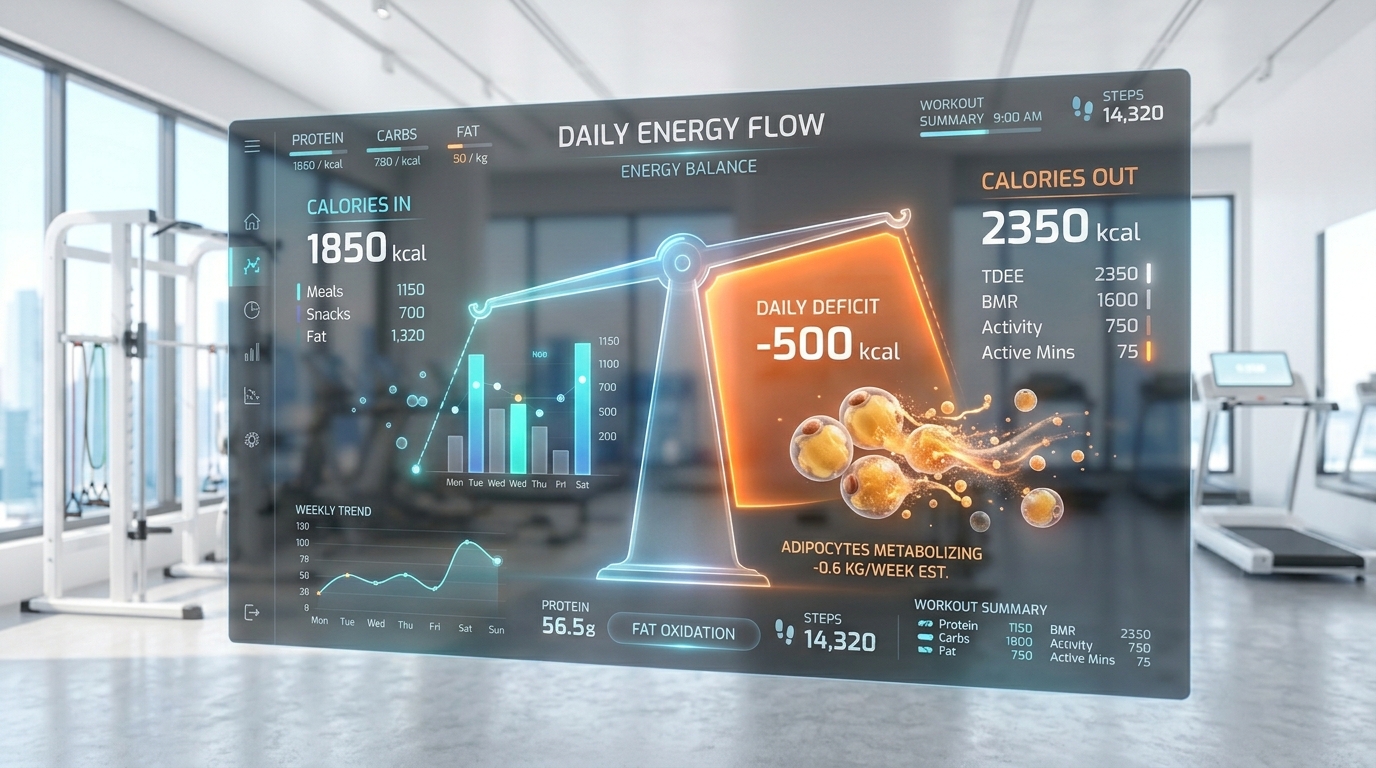
A calorie deficit means you are burning more calories than you consume. That's it. That's the whole concept. When your body doesn't get enough calories from food to cover its daily energy needs, it turns to stored fat as fuel. And that stored fat? It shrinks. That's fat loss.
Think of your body like a bank account. Every day, you deposit calories through food and drinks. Every day, your body withdraws calories through basic functions — breathing, circulation, digestion — plus whatever activity you do. If you consistently withdraw more than you deposit, your balance (body fat) goes down.
The opposite — eating more than you burn — is a calorie surplus, which leads to fat storage. Eating exactly what you burn is called maintenance. Understanding which zone you're in at any given time is the first real step toward controlling your body composition.
Why a Calorie Deficit Is the Foundation of Every Fat Loss Plan
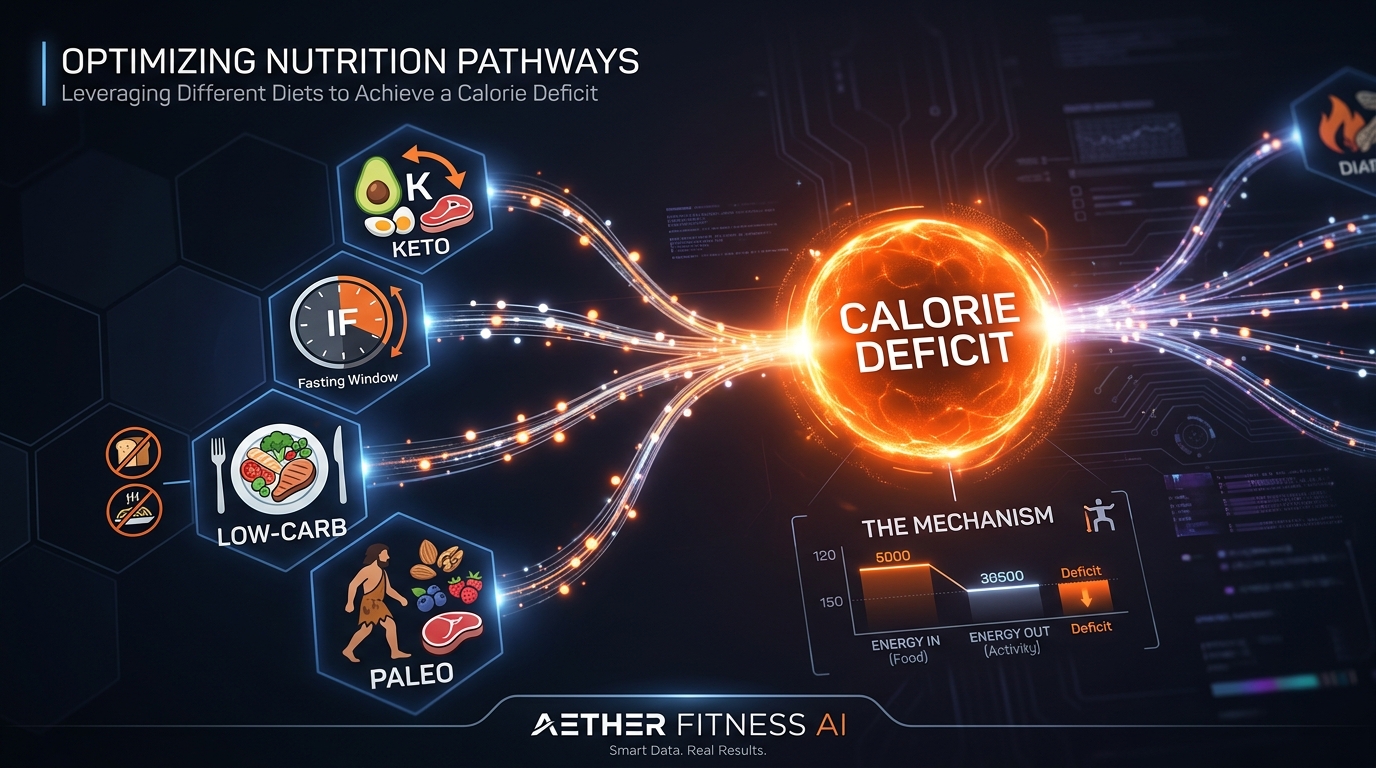
Every popular diet you've ever heard of works — when it works — because it creates a calorie deficit. Keto works because cutting carbs usually means eating fewer total calories. Intermittent fasting works because compressing your eating window naturally limits intake. High-protein diets work because protein is satiating and harder to overeat.
None of these diets have magic. They're all just structured ways to help you eat less than you burn.
This isn't an opinion — it's the scientific consensus. Research published in the Journal of Obesity and supported by the National Institutes of Health consistently confirms: energy deficit is the single most important factor in fat loss, regardless of the macronutrient composition of the diet.
Understanding this is actually liberating. It means you're not locked into one eating style. You don't have to give up carbs forever or eat the same chicken-and-broccoli meal every day. You just have to stay in a deficit — in a way that actually works for your life.
How to Calculate Your Personal Calorie Deficit
To find your calorie deficit, you first need to know your maintenance calories — the number of calories your body burns each day doing everything it does. This is called your Total Daily Energy Expenditure (TDEE).
TDEE is made up of four components:
- Basal Metabolic Rate (BMR): The calories your body burns at complete rest — just to keep your heart beating, your lungs breathing, and your organs functioning. This makes up 60–75% of your total calorie burn.
- Thermic Effect of Activity (TEA): Calories burned through intentional exercise — gym sessions, runs, workouts.
- Non-Exercise Activity Thermogenesis (NEAT): Calories burned through daily movement you don't think of as "exercise" — walking to your car, fidgeting, doing dishes. This is surprisingly large and highly variable between people.
- Thermic Effect of Food (TEF): The energy your body uses to digest and process food — about 10% of total calories consumed.
Once you know your TDEE, subtract 300–500 calories from it. That's your daily calorie target for steady, sustainable fat loss.
The calculation sounds complicated — and manually doing it is tedious. That's exactly why tools like the AI fat loss calculator at FitFuelAI exist. In under two minutes, you enter your stats and get a precise, personalized TDEE and calorie deficit target — no spreadsheets required.
⚡ Skip the Math — Let AI Calculate Your Deficit
FitFuelAI's free tool calculates your TDEE, calorie deficit, and full macro targets in under 60 seconds.
Calculate My Calorie Deficit Free →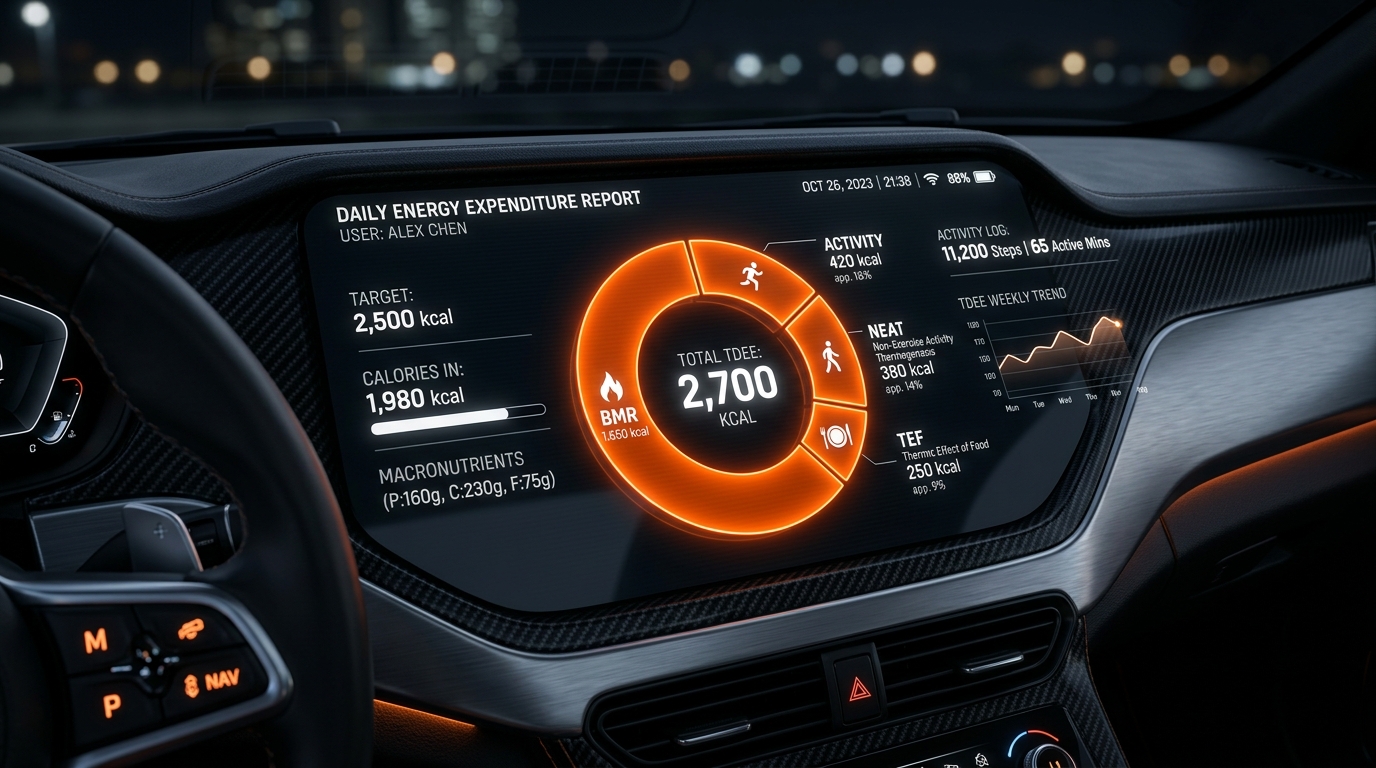
How Big Should Your Calorie Deficit Be?
This is where most people get it wrong — in both directions.
Too Small a Deficit
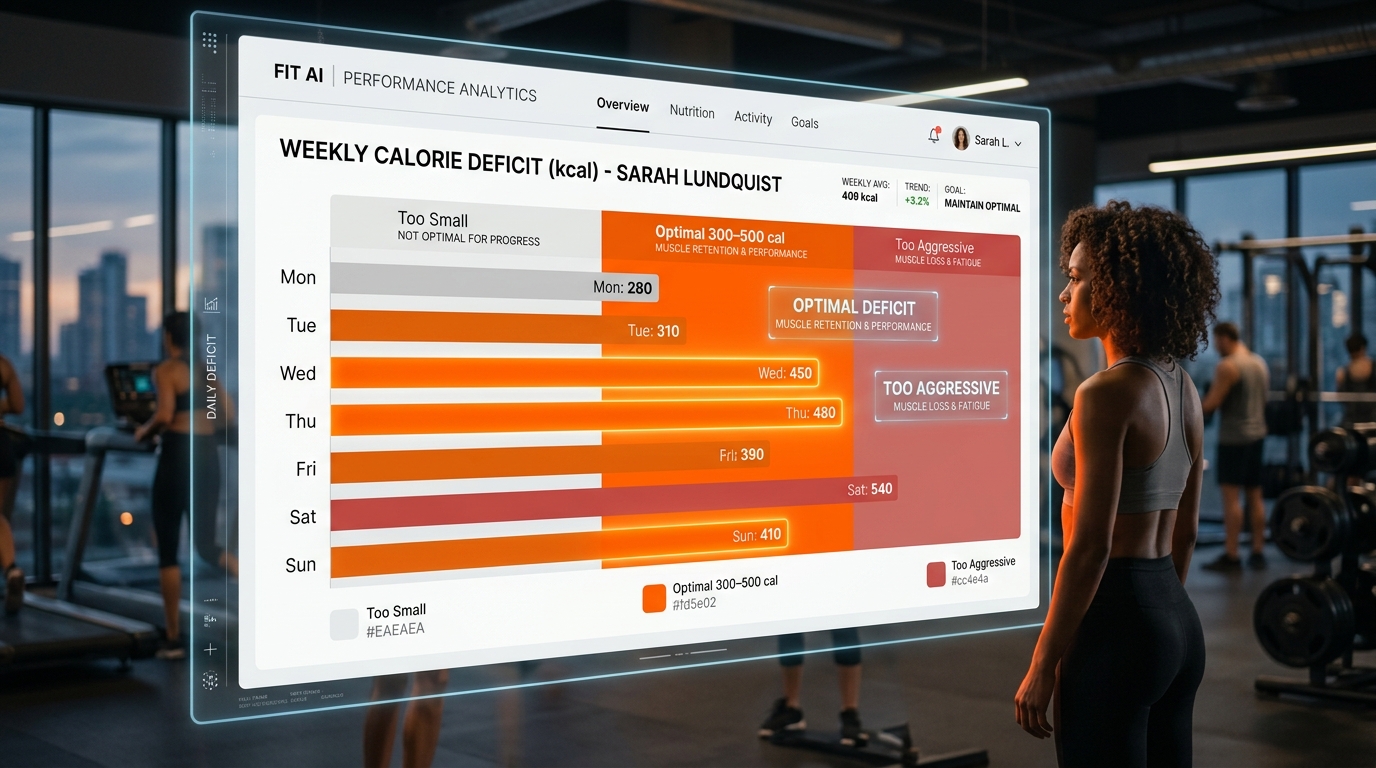
A 100-calorie daily deficit will technically produce fat loss — but so slowly that you'd barely notice it in months. Progress needs to be visible enough to stay motivating.
Too Large a Deficit
Cut calories too aggressively and your body fights back. You'll lose muscle alongside fat, your metabolism will slow down (a phenomenon called metabolic adaptation), you'll feel exhausted, and you'll likely binge and rebound within weeks. Eating below 1,200 calories a day as a woman or 1,500 as a man is generally flagged as unsafe by most physicians and dietitians.
The Sweet Spot
Research consistently points to a 300–500 calorie daily deficit as the optimal range for sustainable fat loss. This produces roughly 0.5–1 pound of actual fat loss per week — which adds up to 25–50 pounds over a year without destroying your energy or muscle mass.
For those with more fat to lose who can tolerate a larger deficit without muscle loss risk, a 500–750 calorie deficit is also well-supported by clinical guidelines from bodies like the American Heart Association and NIH.
The 5 Most Common Calorie Deficit Mistakes (And How to Fix Them)
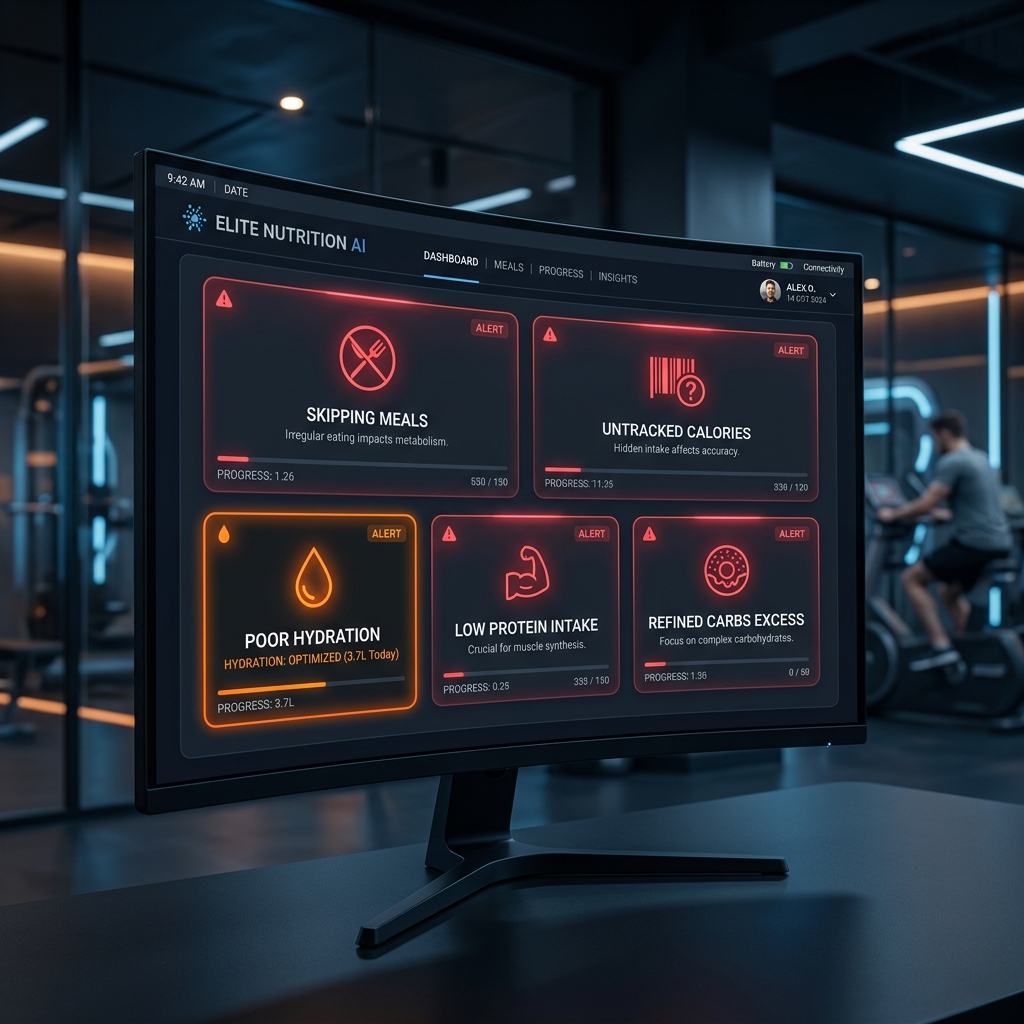
Knowing the concept and executing it in real life are two different things. Here are the five mistakes that silently sabotage most fat loss attempts:
Mistake 1: Underestimating Calories Consumed
Studies show people underestimate their calorie intake by up to 50% on average. That tablespoon of olive oil you didn't count? 120 calories. The handful of trail mix while cooking? Another 200. Accurate tracking — even just for a week — is eye-opening and often the only change someone needs to start losing fat again.
Mistake 2: Overestimating Calories Burned Through Exercise
The treadmill said you burned 600 calories during that 45-minute run. The reality is probably closer to 350. Cardio machines and fitness apps routinely overestimate calorie burn by 20–40%. This creates a dangerous illusion that gives you permission to eat back more than you burned.
Mistake 3: Not Eating Enough Protein
When you're in a calorie deficit, your body can and will break down muscle for energy — unless you eat enough protein to prevent it. Aim for at least 0.7–1g of protein per pound of lean body mass. This number should be calculated based on your actual composition, not a generic rule. FitFuelAI's body analysis tool calculates this for you based on your estimated lean mass.
Mistake 4: Drinking Hidden Calories
Coffee drinks, juices, sports drinks, flavored waters, and alcohol all add up in ways that don't register mentally as "eating." A daily Starbucks latte is about 250 calories — 1,750 per week — which is half a pound of fat in stored energy. Water, black coffee, and unsweetened tea should be your go-to beverages during a fat loss phase.
Mistake 5: Going Too Hard, Too Fast, Then Quitting
The most common pattern in failed fat loss attempts: extreme restriction for two weeks, burnout, a weekend binge, feeling like a failure, and giving up entirely. A moderate deficit you can maintain for six months beats an extreme deficit you can hold for two weeks — every single time. Consistency beats intensity.
The Best Foods to Eat in a Calorie Deficit
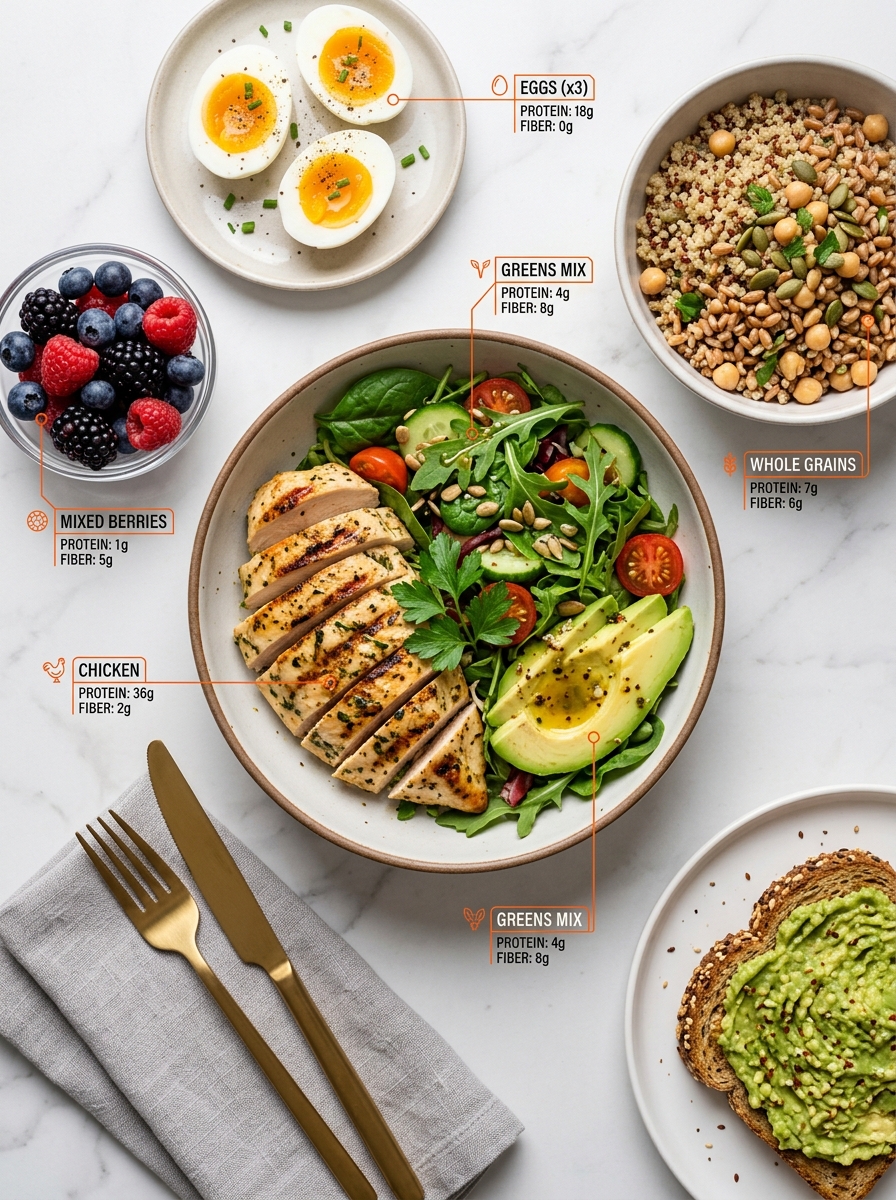
Being in a calorie deficit doesn't mean being hungry all the time. The right foods let you eat generous volumes, feel full, maintain energy, and still hit your deficit without suffering through it.
High-Volume, Low-Calorie Foods
These fill your stomach without blowing your calorie budget:
- Leafy greens (spinach, kale, arugula) — almost zero calories per cup
- Cucumbers, zucchini, celery, and broccoli — filling, high in water and fiber
- Berries — sweet, high in fiber, low in calories compared to other fruits
- Egg whites — nearly pure protein with minimal calories
High-Protein Foods That Preserve Muscle
- Chicken breast, turkey, lean ground beef
- Greek yogurt (plain, nonfat) — 17g protein per cup
- Cottage cheese — high protein, surprisingly satiating
- Fish and shellfish — lean, high in protein, rich in omega-3s
- Tofu and tempeh — plant-based protein options with good amino acid profiles
Fiber-Rich Carbohydrates That Keep You Full
- Oats — slow-digesting, stabilize blood sugar, reduce cravings
- Legumes (lentils, chickpeas, black beans) — fiber + protein combo
- Sweet potatoes — nutritious, filling, relatively low glycemic index
- Brown rice and quinoa — whole grain carbs that digest slowly
The key principle: prioritize protein and fiber at every meal. These two nutrients do the most work in keeping you full while staying in a deficit — a finding supported by research published in journals like Advances in Nutrition and confirmed by nutritionists consistently.
How AI Transforms Calorie Tracking From a Chore Into a Superpower
Here's the honest truth about traditional calorie tracking: most people hate it. Manually logging every meal, guessing portion sizes, doing mental math after every bite — it's exhausting. And when something is exhausting, people quit.
That's where AI changes everything.
Personalized Deficit — Not a Generic Guess
Most generic calorie calculators online use a basic formula and spit out a number that's the same for anyone with your height and weight. The problem? Two people with the same stats can have wildly different metabolisms, muscle mass levels, and activity patterns. AI tools analyze the full picture — your body composition, your lifestyle, your goals — and give you a number that's actually calibrated to you.
Dynamic Adjustments as You Change
As you lose fat, your calorie needs change. A static app won't catch this. AI-powered tools like FitFuelAI can track your progress over time and alert you when your targets need to be recalibrated — preventing the dreaded plateau that kills motivation around weeks 6–8 for most people.
Macro Breakdowns, Not Just Calorie Counts
Knowing your calorie target is only half the picture. How you fill those calories — protein, carbs, fat — dramatically affects how much muscle you preserve, how full you feel, and how your hormones respond to the deficit. AI tools calculate your macro targets based on your goals and body type, removing the guesswork entirely.
60-Second Setup vs. Hours of Research
Figuring out your TDEE, calculating a deficit, distributing macros, adjusting for activity level — doing this manually could take an afternoon of research and math. With FitFuelAI's AI calorie tracking tool, you enter your stats, hit calculate, and have a complete, personalized fat loss plan in under 60 seconds.
🧠 Let AI Build Your Calorie Deficit Plan
Stop guessing. FitFuelAI calculates your exact deficit, macros, and fat loss timeline — free, in seconds.
Get My Personalized Plan →
FAQ: Your Calorie Deficit Questions Answered
How do I know if I'm in a calorie deficit?
The most reliable sign is consistent, gradual weight loss over 2–4 weeks. Day-to-day fluctuations in water weight, hormones, and food volume can mask the trend — so track weekly averages, not daily numbers. If your average weight is trending down over three weeks, you're in a deficit. If it's flat or rising despite eating what you think is a deficit, something in your tracking or estimation is off.
Can I lose fat without counting calories?
Yes — but it's harder to optimize. Strategies like eating only whole foods, removing processed foods, and eating high-protein meals naturally push many people into a deficit without explicit counting. The risk is that without tracking, it's easy to unknowingly eat at maintenance or even a surplus. For best results, track for at least a few weeks to establish your baseline, then you can often loosen up once you have an intuitive feel for your intake.
What happens if I eat too few calories?
Going too far below your calorie needs can trigger metabolic adaptation — your body reduces its energy expenditure to match the reduced intake. You'll also risk muscle loss, nutrient deficiencies, hormonal disruptions (especially thyroid and reproductive hormones), fatigue, and brain fog. Most guidelines recommend staying above 1,200 calories per day for women and 1,500 for men as an absolute floor.
Should I eat back the calories I burn through exercise?
This depends on how your calorie target was calculated. If your TDEE already accounts for your activity level (which is how FitFuelAI calculates it), then no — your calorie target already includes your exercise burn, and eating back those calories would neutralize your deficit. If you used a sedentary TDEE and then added intense workouts, eating back 50% of estimated burn is a reasonable approach given how often apps overestimate exercise calorie expenditure.
How long will it take to see results from a calorie deficit?
Most people notice the scale dropping within the first week — often 2–4 pounds, primarily from water and glycogen loss. True fat loss typically becomes visually noticeable after 3–5 weeks of consistent effort. At 0.5–1 lb of fat loss per week, expect meaningful body composition changes to show clearly at the 6–8 week mark. Patience here is essential — and this is where a personalized timeline from an AI tool like FitFuelAI helps set realistic expectations.
Do I need to exercise to lose fat in a calorie deficit?
No — fat loss is possible through diet alone. But exercise, especially resistance training, dramatically improves the quality of your results by preserving (or even building) muscle while you lose fat. This means a higher percentage of your weight loss comes from fat — and you end up looking leaner, not just lighter. Think of the calorie deficit as what produces the loss, and exercise as what shapes what stays.
🚀 Ready to Start Losing Fat the Smart Way?
Get your personalized calorie deficit, macro targets, and fat loss timeline — powered by AI, completely free.
Start With FitFuelAI →Final Thoughts
A calorie deficit is not a punishment. It's not starvation. It's not a crash diet. It's simply the mathematical state your body needs to be in to burn stored fat — and once you understand that, fat loss stops being mysterious and starts being manageable.
The challenge has never been the concept. It's always been the execution: knowing your exact number, tracking accurately, adjusting as you progress, and staying consistent long enough to see the results. That's exactly the problem AI solves.
Whether you're just starting your fat loss journey or hitting a stubborn plateau after months of effort, the first step is the same: know your numbers. Use FitFuelAI's free AI fat loss calculator to get your personalized calorie deficit, TDEE, and macro targets in 60 seconds — and finally give your body the precision plan it deserves.
Pingback: Why Fat Loss Fails — And How To Fix It | FitFuelAI - fitfuelai.site
Pingback: How to Calculate Macros for Fat Loss (Free 2026 Guide) - fitfuelai.site