How AI Body Fat Calculators Are Changing Weight Loss in 2026
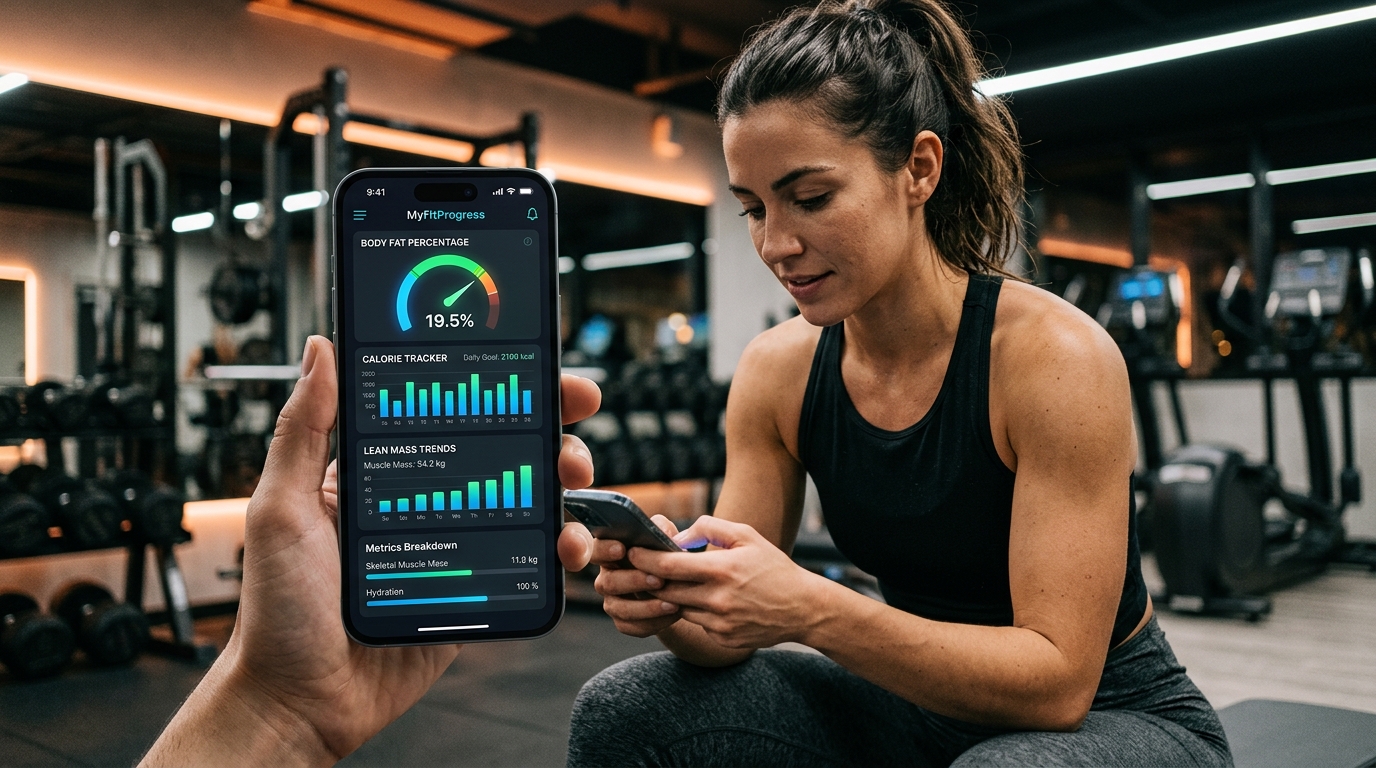
Let's be real — losing weight has never been as confusing as it is today. Between conflicting diet advice, outdated BMI charts, and generic calorie apps that treat everyone the same, millions of people are working hard but not seeing results. That's exactly where the AI body fat calculator steps in and changes everything.
In 2026, artificial intelligence isn't just for tech companies or self-driving cars. It's sitting right inside your fitness journey — analyzing your body composition, estimating your fat percentage, and giving you a personalized roadmap to fat loss that actually makes sense for your body.
According to the World Health Organization, over 1 billion people worldwide are now living with obesity — a number that makes smarter, more personalized weight management tools more critical than ever. Traditional calculators weren't built for this scale of need. AI tools are.
In this article, we'll break down what an AI body fat calculator is, how it works, why it leaves traditional tools in the dust, and how you can start using one today to finally get real fat loss results.
What Exactly Is an AI Body Fat Calculator?
An AI body fat calculator is an online fitness tool that uses artificial intelligence — specifically machine learning algorithms — to estimate your body fat percentage based on inputs like your age, gender, height, weight, waist circumference, activity level, and sometimes wearable device data.
Unlike a basic BMI calculator that just divides your weight by height squared (and honestly, doesn't tell you much), an AI-powered tool looks at the full picture. It cross-references your data against large health datasets, recognizes patterns, and gives you a composite result that's actually meaningful: your estimated fat mass, lean mass, and what your healthy weight range should look like.
Think of it this way: two people can both weigh 175 lbs. One is a muscular athlete with 14% body fat. The other is sedentary with 34% body fat. A BMI calculator would treat them almost identically. An AI fat loss calculator would give them completely different guidance — because their physiology actually is completely different.
Machine Learning Core
Trained on thousands of real body composition data points for accurate, population-calibrated pattern recognition.
Multi-Variable Analysis
Uses age, gender, activity level, body measurements, and more — not just weight alone.
Personalized Output
Delivers a fat loss target, calorie deficit estimate, and ideal weight range built for your specific body.
How AI Analyzes Your Body Composition
So how does this actually work? Here's a simplified breakdown of what happens when you use an AI fitness tool for body composition analysis:
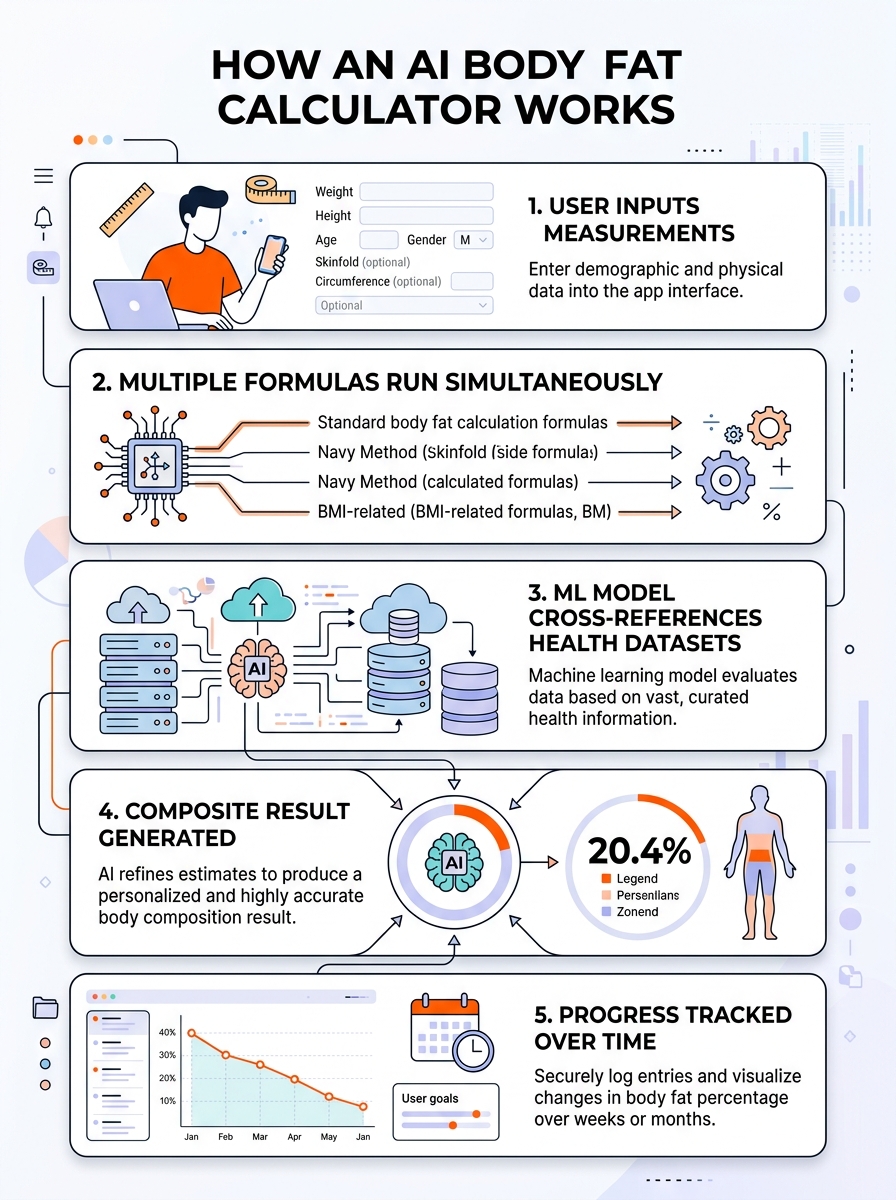
- You enter your data — weight, height, age, sex, waist/hip measurements, and activity level. Some tools also use neck circumference for the U.S. Navy body fat method estimation.
- The AI runs multiple validated formulas simultaneously — including the Jackson-Pollock skinfold method, the Deurenberg equation, and the YMCA body fat formula — then applies machine-learned weights based on your specific profile.
- Machine learning adjusts for population data — your results are cross-referenced with large-scale health datasets to refine accuracy beyond any single formula.
- You get a composite result — estimated body fat %, lean body mass, fat mass, BMR (basal metabolic rate), and a recommended calorie intake for your specific goal.
- The tool calibrates over time — the more data you feed it across weeks, the more accurate its tracking and projections become.
Some advanced weight loss AI tools now integrate with Apple Health, Fitbit, or Garmin to pull in real-time activity data, making their estimates even sharper. This is how modern online fitness tools have leaped ahead of what existed even three years ago.
BMI vs. Body Fat Percentage: Why the Difference Matters
This is one of the most misunderstood topics in fitness — and it directly affects thousands of people chasing the wrong number on the scale.
The Problem With Relying on BMI Alone
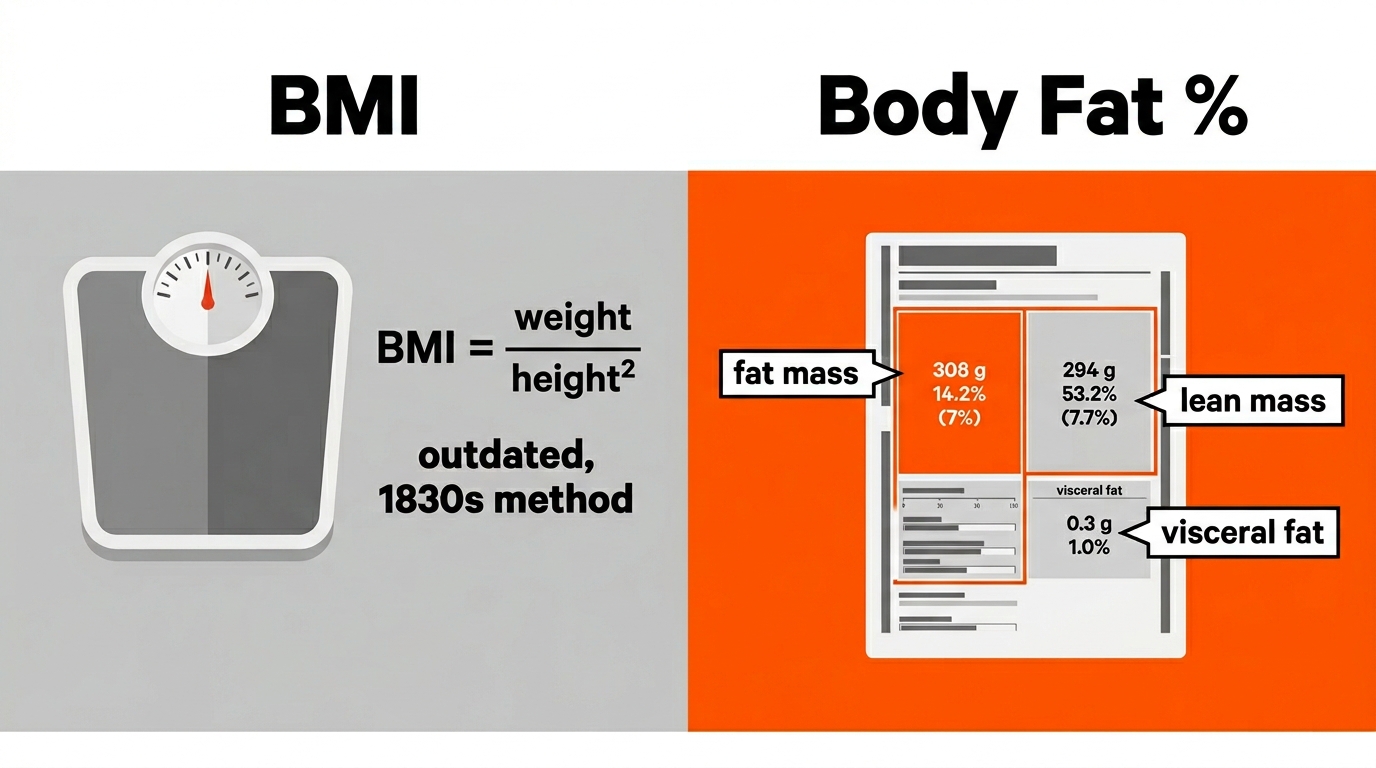
The BMI calculator was originally designed in the 1830s by Belgian statistician Adolphe Quetelet — as a population-level statistical tool, not a personal health measurement. Despite this, it remains widely used in clinics, apps, and health insurance assessments. The Harvard T.H. Chan School of Public Health has noted that BMI is an imperfect measure because it doesn't directly assess body fat or account for key variables like muscle mass, bone density, or fat distribution.
BMI's well-documented blind spots:
- Doesn't distinguish muscle from fat. A professional athlete can register as "obese" on a BMI scale because muscle weighs more than fat per unit of volume.
- Ignores fat distribution. Visceral fat (fat around your organs) is far more dangerous than subcutaneous fat, and BMI can't see the difference at all.
- Fails different body types. Research shows BMI consistently misclassifies health status for certain ethnic groups, older adults, and women — particularly those with higher natural body fat percentages.
- Doesn't change with body recomposition. You can lose 10 lbs of fat, gain 10 lbs of muscle, and your BMI won't move — even though your health improved dramatically.
Why Body Fat Percentage Is the Better Metric
Your body fat percentage calculator result gives you the actual ratio of fat to total body mass. This is what fitness professionals and sports scientists actually care about, because it directly informs meaningful decisions: how much to eat, how to train, and what "healthy" actually looks like for your specific body.
According to the American College of Sports Medicine (ACSM), body fat percentage is a far more clinically useful measure of health and fitness risk than BMI alone — particularly for athletes and individuals undergoing body recomposition.
A healthy weight calculator powered by AI uses body fat percentage — not just BMI — to set a realistic, physiology-based goal weight for you. That's a meaningful difference in real-world application.
Traditional Calculators vs. AI Fitness Calculators: A Direct Comparison
Here's where things get tangible. Let's put traditional health calculators side-by-side with modern AI fitness tools so you can see exactly what you're missing out on:
| Feature | Traditional Calculators | AI Body Fat Calculators 2026 |
|---|---|---|
| Analysis Method | Single formula (e.g., BMI only) | Multiple validated formulas + ML weighting |
| Body Composition | Weight only — no fat/muscle split | Fat mass, lean mass, visceral fat estimate |
| Calorie Guidance | Generic daily calorie estimate | Personalized calorie deficit calculator based on your composition |
| Personalization | One-size-fits-all output | Age, gender, activity level, body type all factored in |
| Goal Setting | Shows ideal BMI range only | Calculates target body fat %, ideal lean body mass, fat loss timeline |
| Wearable Integration | None | Syncs with Apple Health, Garmin, Fitbit in advanced tools |
| Accuracy Over Time | Static — never learns or improves | Adaptive model improves as you log more data |
| Progress Tracking | Manual and disconnected | Automated fat loss trajectory with trend visualization |
| Science Foundation | Based on 19th-century statistical models | Trained on modern clinical and population health data |
It's not a close contest. If you're still relying on a basic BMI calculator or a static fat loss calculator spreadsheet, you're leaving a significant amount of accuracy and actionable data on the table.
Benefits of Using AI-Powered Fitness Tools for Weight Loss
The rise of weight loss AI isn't just a tech trend — it's solving real, persistent problems for people who've struggled with generic diet advice for years. Here's what AI fitness tools genuinely deliver:
What a Great AI Body Fat Calculator Actually Gives You
- Accurate body fat % estimate without expensive lab tests
- Personalized calorie deficit recommendation for your body
- Lean body mass calculation to protect muscle during fat loss
- Realistic fat loss timeline based on your body composition
- Healthy weight range that factors in muscle mass, not just scale weight
- Macronutrient guidance (protein, carbs, fat split)
- BMR and TDEE calculation for precise energy balance
- Progress tracking with fat loss trend visualization
1. No More Guessing Your Calorie Deficit
One of the biggest reasons people plateau on their weight loss journey is that they're running the wrong calorie deficit — either too shallow to create meaningful change, or too aggressive and burning through muscle along with fat. An AI calorie calculator uses your actual body composition data to prescribe a deficit that's effective yet sustainable.
Research published in the Journal of the Academy of Nutrition and Dietetics has shown that personalized calorie guidance — accounting for individual lean mass and metabolic rate — produces significantly better long-term fat loss outcomes than generic calorie-counting approaches.
2. You Stop Chasing the Wrong Goal
Many people set a goal weight based on what they weighed in high school or what a BMI chart says they "should" weigh. These targets are often arbitrary and physiologically meaningless. An AI-powered healthy weight calculator builds your target around your lean body mass — accounting for your muscle and bone structure — giving you a weight goal that actually makes physiological sense for your body.
3. It Adapts As You Progress
Your metabolism isn't static. As you lose fat and build muscle, your calorie needs genuinely change. Traditional tools can't adapt to this. Modern AI fitness tools that receive updated measurements recalculate your needs dynamically — keeping your plan calibrated as your body transforms rather than locking you into an outdated starting-point formula.
Why Traditional Calculators Are Officially Outdated
Those early tools served a purpose for their time. But in 2026, using a standard calorie calculator without personalization is like navigating a new city with a paper map when GPS is free. Here's what traditional fitness calculators fundamentally get wrong:
- They apply universal formulas to individual bodies — which is scientifically problematic when we know metabolism varies enormously between people of the same weight
- They ignore hormonal factors, sleep quality, and chronic stress — all of which the Mayo Clinic notes directly affect fat storage and metabolic rate
- They can't track body recomposition — you could be getting dramatically healthier while the scale barely moves, and a basic tool will show zero evidence of your progress
- They create false urgency (or false comfort) by pointing to an arbitrary number rather than meaningful, physiologically grounded health markers
How Accurate Are AI Fat Loss Calculators, Really?
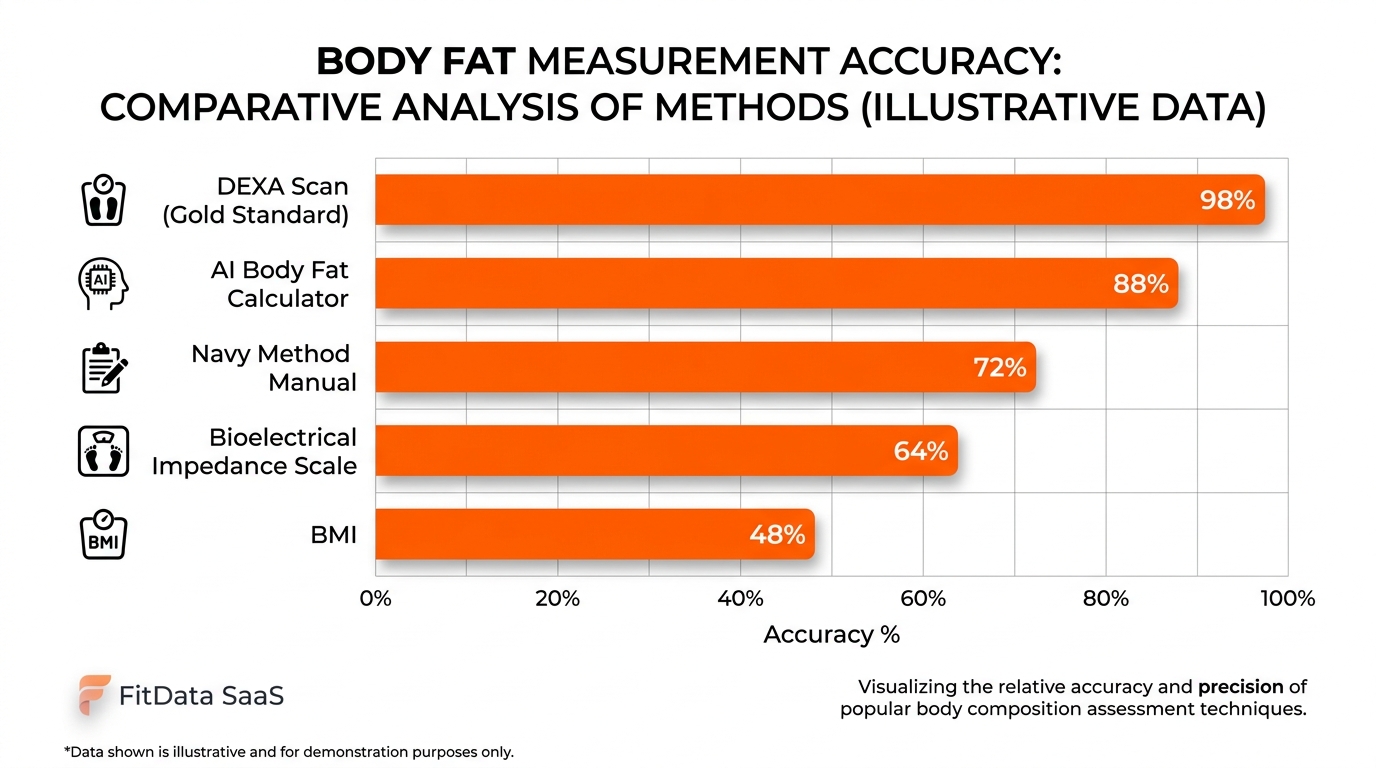
This is the right question to ask — and it deserves a direct, honest answer. No online tool can replicate the precision of a DEXA scan (dual-energy X-ray absorptiometry), which is widely regarded as the clinical gold standard for body composition measurement. However, for practical, everyday fat loss guidance:
- High-quality AI body fat calculators using the Navy method + machine learning refinement typically fall within 3–5% of DEXA scan results for most people when measurements are taken correctly
- Accuracy improves meaningfully when you provide more measurement data points (waist, hips, neck, wrists)
- Consistency matters more than single-point precision — tracking your body fat percentage trend over weeks tells a far more useful story than a single isolated reading
- Wearable-integrated tools close the accuracy gap further by incorporating real-time daily step counts, heart rate variability, and resting metabolic data
For the overwhelming majority of people who don't have access to clinical testing facilities, a well-designed AI body fat calculator is the most practical, accessible, and actionable option available — and significantly more informative than relying on BMI alone.
The Best Way to Use an AI Body Fat Calculator for Fat Loss
Having access to a great tool doesn't automatically produce results — using it intelligently is what drives change. Here's how to get the most out of any AI fitness tool for real, sustainable fat loss:
- Get your baseline measurements right. Use a flexible measuring tape first thing in the morning before eating. Measure your waist at the narrowest point (not where your belt sits), hips at the widest point, and neck just below the larynx. Consistency in measurement location matters more than single-point precision.
- Set a realistic goal body fat % — not just a weight. Aim for a healthy fat percentage range appropriate for your age and gender rather than a number on a scale. Ask the AI tool what your target lean body mass should be and work backward from there.
- Use the calorie deficit recommendation — but don't over-restrict. A deficit of 350–500 calories per day is generally optimal for fat loss without excessive muscle loss, as supported by established sports nutrition guidelines. If the tool outputs 1,200 calories and you're highly active, recalculate with a longer, more sustainable timeline.
- Recheck every 4 weeks. Enter updated measurements monthly. This allows the AI to recalibrate your calorie target and show you body fat % reduction, not just scale weight change — which is far more motivating and accurate.
- Combine with strength training data. If you lift weights, tell the tool. Muscle-preserving fat loss requires slightly elevated protein targets and different calorie timing — and a good AI calorie calculator will account for resistance training as an activity variable.
Common Mistakes People Make While Losing Weight
Even with the best AI tools available, certain habits consistently derail fat loss. Here are the mistakes that undermine progress most often — and exactly how to avoid them:
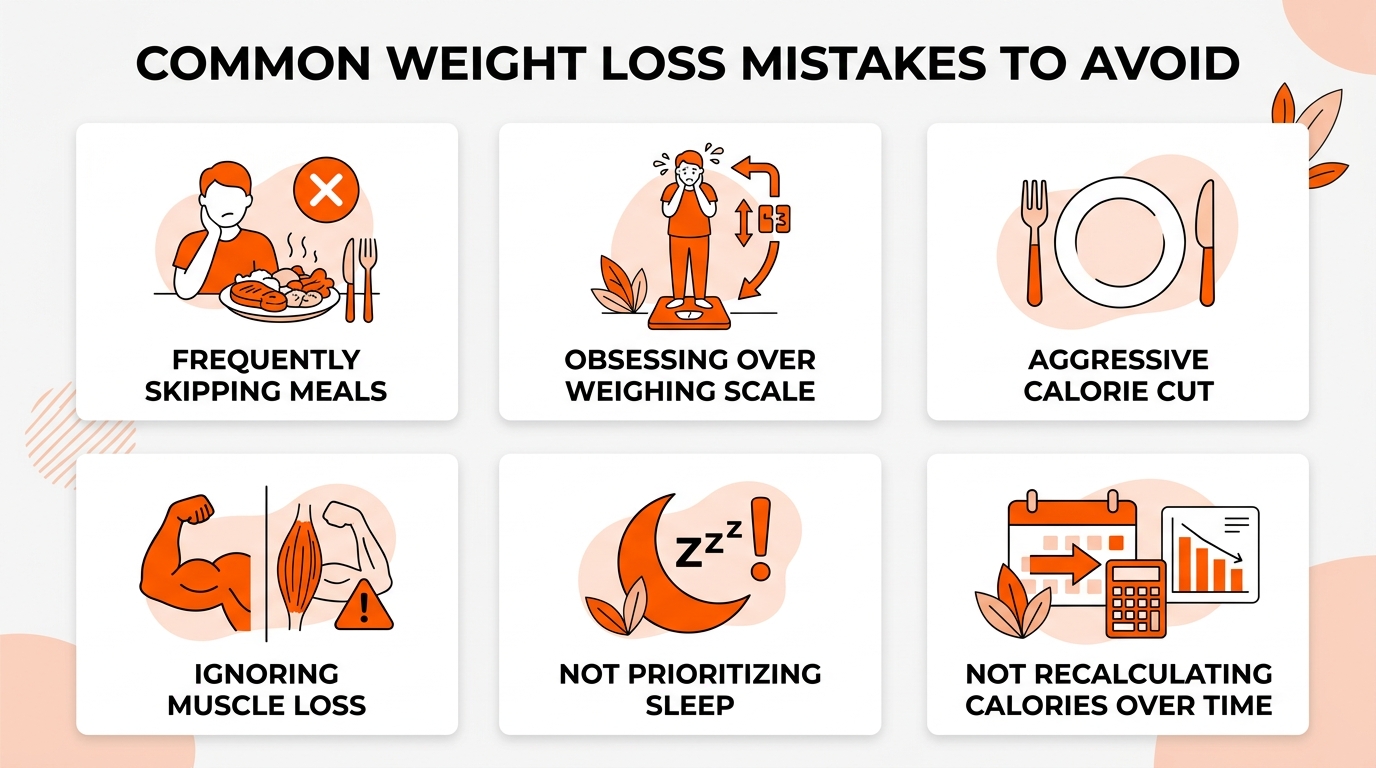
- Eating too little protein. When you're in a calorie deficit, your body sources energy from all available tissue — including muscle. High protein intake (typically 0.7–1g per pound of lean body weight) signals muscle preservation while the deficit burns fat. The International Society of Sports Nutrition recommends higher protein intakes specifically during calorie restriction phases.
- Ignoring body fat % and only tracking scale weight. Body weight can fluctuate 2–5 lbs in a single day from water, food volume, and hormonal shifts. Body fat percentage tracked over weeks is a far more accurate picture of real progress.
- Setting a deficit too aggressive, too fast. Cutting 1,000+ calories per day may produce faster scale results short-term, but dramatically increases muscle loss, slows metabolic rate, and is nearly impossible to sustain for more than a few weeks.
- Not recalculating as weight changes. A 220 lb person and a 185 lb person need different calorie intakes. As you lose weight, your BMR decreases. Re-running your fat loss calculator every 3–4 weeks keeps your plan accurate and prevents plateauing.
- Measuring progress by the mirror alone. Visual changes from fat loss often lag 4–6 weeks behind actual metabolic progress. If your body fat percentage is trending downward on your tracker, you are winning — even if you can't see it yet.
- Chronically undersleeping. Research consistently shows poor sleep (under 7 hours) significantly disrupts ghrelin and leptin — the hormones that regulate hunger and fullness — leading to overconsumption. No calculator can compensate for systemic hormonal disruption from sleep deprivation.
Pro Tips: Maximize Your AI Calculator Results
-
1
Take measurements first thing in the morning, after using the bathroom, before eating or drinking anything. This is when your body is most physiologically consistent and gives the most reliable baseline data.
-
2
Use the same flexible measuring tape in the same position every time. A 1-inch difference in waist measurement location can shift your estimated body fat by 2–3%, making your trend data meaningless.
-
3
Track your weight daily but evaluate it weekly — use a 7-day rolling average rather than comparing individual days. This smooths out natural fluctuations and reveals real directional trends.
-
4
Pair your AI body fat calculator with a food tracking app (like MyFitnessPal or Cronometer) for the first 30 days. Even a rough food log dramatically increases the real-world accuracy of calorie balance recommendations.
-
5
Don't adjust your calorie target more than once every 3 weeks. Patience is the most underrated input in any fat loss equation — most people abandon a plan right before it starts working.
The Future of AI in Fitness and Health
We're genuinely only at the beginning of what weight loss AI can do. In 2026, here's what's already emerging — and what's rapidly coming next:
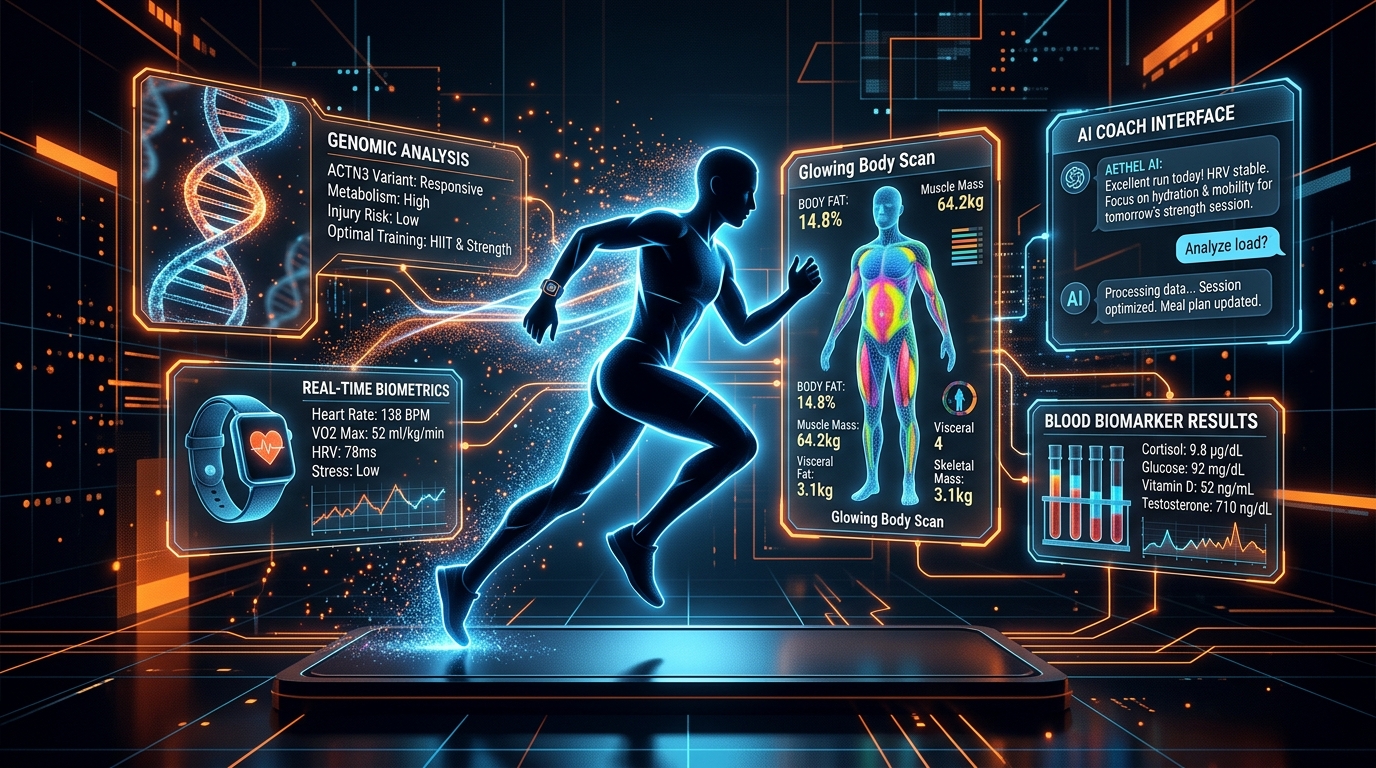
Visual Body Scan AI
Tools that estimate body fat % from a smartphone photo using pose detection — already in limited beta with promising early accuracy benchmarks.
Biomarker Integration
Connecting blood panel data (insulin, cortisol, hormones) with AI to personalize fat loss guidance at the hormonal level.
Real-Time Wearable AI
Smart rings and watches feeding continuous metabolic data into AI engines that recalibrate calorie targets daily — not monthly.
Genetic Fitness Profiles
DNA test integration to account for genetic fat storage tendencies, carbohydrate metabolism speed, and optimal macro ratios per individual.
The trajectory is unmistakable: AI fitness tools are becoming more personal, more accurate, and more deeply integrated into daily health decisions. As McKinsey's healthcare AI research highlights, personalized AI-driven health tools are one of the fastest-growing areas in consumer health technology — and the gap between a clinical body composition assessment and a free online tool is closing faster than most people realize.
For anyone serious about fat loss, learning to leverage these tools now — before they become completely ubiquitous — creates a genuine head start in reaching health goals faster and more sustainably than ever before.
Common Questions About AI Body Fat Calculators
The Bottom Line: AI Is the Smarter Way to Lose Fat
Weight loss in 2026 doesn't have to be a guessing game. The days of starving yourself on a generic calorie target, or obsessing over a BMI number invented in the 1800s, are over — at least for anyone willing to use the tools that are now available.
An AI body fat calculator gives you what every person trying to lose fat genuinely needs: a clear, personalized picture of what your body is actually made of, what your real goal should be, and exactly how to reach it without burning through muscle or damaging your metabolism in the process.
Whether you're just starting your fat loss journey or you've been stuck at a plateau for months, the right AI fitness tools can show you something no scale or generic BMI table ever could — the truth about your body composition, and a science-backed plan that actually respects it.
The best time to start using smarter tools was yesterday. The second best time is right now.
Find Out Your Real Body Fat % — Free, Right Now
Stop guessing with outdated BMI charts. Use our AI-powered body fat calculator to get your personalized body composition analysis, calorie deficit recommendation, and fat loss roadmap in under 2 minutes.
🔥 Try the AI Body Fat Calculator ✓ Free to use ✓ No signup required ✓ Results in 60 seconds